Operational Analytics
Operational analytics is the practice of analyzing data in real-time or near-real-time to drive immediate, automated actions in front-line business systems rather than waiting for historical reporting.
By Alex Merced Last updated
From Dashboards to Actions
For decades, the primary output of a data platform was a dashboard. A data warehouse would crunch numbers overnight, and the next morning, executives would look at a BI report to see how the business performed yesterday. This is historical analytics: using data to understand the past.
Operational analytics flips this paradigm. Instead of using data to inform human decision-making after the fact, operational analytics integrates data directly into the day-to-day operations of the business to drive immediate action. The primary consumer of operational analytics is not a human looking at a chart, but a machine, an application, or a front-line worker executing a task right now.
If a customer adds items to an e-commerce cart but abandons it, operational analytics triggers a personalized discount email 15 minutes later based on their predicted lifetime value. If a manufacturing sensor detects a microscopic vibration anomaly, operational analytics automatically shuts down the assembly line before the machine breaks.
The Operational Analytics Architecture
Operational analytics requires an architecture that prioritizes low latency and high concurrency, which traditional data warehouses struggle to provide.
1. Fast Ingestion: Data must move from source systems into the analytical platform in seconds or minutes, not hours. This is typically achieved using Change Data Capture (CDC) and streaming platforms like Apache Kafka.
2. Fast Processing: Heavy batch transformations running overnight are incompatible with operational analytics. Stream processing engines (Apache Flink) or micro-batch pipelines process the data in-flight, calculating the necessary metrics (e.g., “current risk score”) in real-time.
3. Fast Serving: The analytical platform must be able to serve the results back to the operational systems at the speed of an API call. Traditional warehouses aren’t built for high-concurrency API lookups. This has led to the rise of real-time OLAP databases (Apache Pinot, Apache Druid) and, increasingly, the use of sub-second lakehouse query engines like Dremio serving data directly to applications.
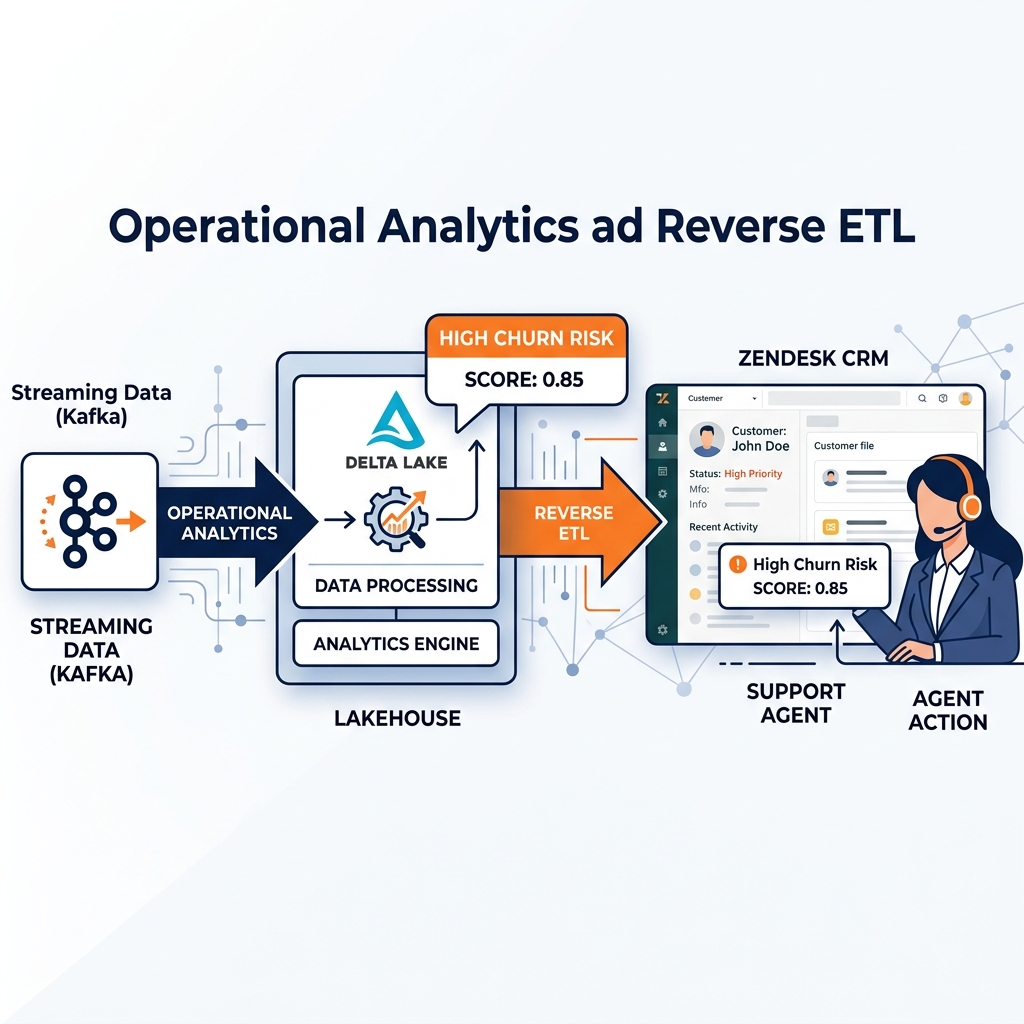
Reverse ETL: Closing the Loop
A key component of modern operational analytics is “Reverse ETL” (or Data Activation). Historically, the data pipeline was a one-way street: data flowed from operational systems (Salesforce, Zendesk) into the data warehouse, and stopped there.
Operational analytics requires closing the loop. Reverse ETL tools (like Hightouch or Census) query the calculated metrics in the data lakehouse (e.g., a “high-risk churn” flag computed by an ML model in the Gold layer) and write that data back into the operational systems.
When a support agent opens Zendesk to answer a ticket, they see the “high-risk churn” flag synced directly from the lakehouse on the customer’s profile, prompting them to offer a premium support experience. The data platform is no longer just a reporting tool; it is actively steering the operational behavior of the company.
Learn More
The books by Alex Merced go further on this topic and the systems it sits inside. Short video explainers cover the same ground in under a minute each.